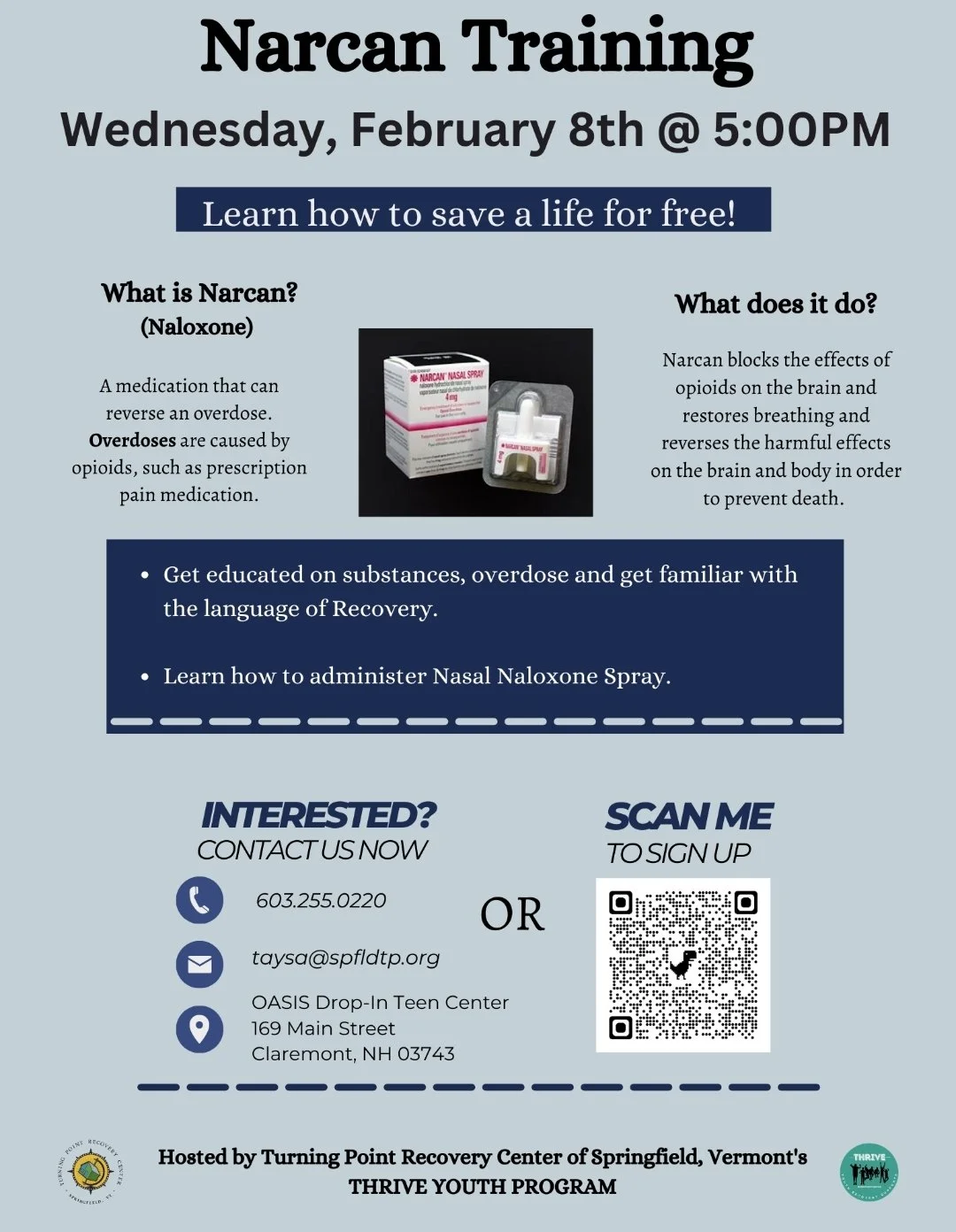
FREE Narcan pick up sites - VT & NH

NALOXONE SITES


Vermont Locations:

Bradford:

·        Clara Martin (Outside)

1483 Lower Plain, Bradford, VT

Burke:

·        Burke Academy (Inside)

60 Alpine Lane, East Burke, VT

Norwich:

·        Dan and Whites (Outside)

319 Main Street, Norwich, VT

Randolph:

·        Clara Martin (Outside)

11 Main Street, Randolph, VT

Springfield:

·        Springfield Food Coop (Inside and Outside in the walkway)

6 Main Street Suite 1, Springfield, VT

South Royalton:

·        South Royalton Library (no box but Narcan available inside if you ask)

23 Alexander Place, South Royalton, VT

Thetford:

·        Thetford Academy (2 boxes inside)

304 Academy Road, Thetford Center, VT

White River Junction:

·        Listen Services Dinner Hall (Inside & Outside)

42 Maple Street Suite 4, WRJ, VT

·        Listen Services thrift store (Inside)

42 Maple Street Suite 2, WRJ, VT

·        Gear Again (outside)

93 South Main Street, WRJ, VT

·        Main Street Museum (Outside)

58 Bridge Street, WRJ, VT -> go to the back of the Museum and you will find the box under the deck near the downstairs door.

·        Clara Martin (Outside)

39 Fogg Farm Road, WRJ, VT

·        VA (Inside?)

163 Veterans Drive, WRJ, VT

·        Upper Valley Haven (Multiple boxes inside the buildings)

713 Hartford Avenue, Hartford, VT

Windsor:

·        Windsor Connection (Inside)

1 Railroad Avenue, Windsor, VT


New Hampshire locations:

Claremont:

·        Groups Together (Outside)

5 Dunning Street, Claremont, NH

·        River Valley Community College (Inside)

1 College Place, Claremont, NH

Croydon:

·        Croydon Fire Department (Inside)

828 NH 10, Croydon, NH

Enfield:

·        Georges (Inside)

66 Main Street, Enfield, NH

Keene:

·        River Valley Community College

88 Winchester Street, Keene, NH

Lebanon/W. Lebanon:

·        Kilton Library (Inside)

80 South Main Street, West Lebanon, NH

·        Lebanon Library (Inside)

9 East Park Street, Lebanon, NH

·        Listen Thrift Store (Inside)

387 Miracle Mile, Lebanon, NH

·        Mascoma Village Store (Outside)

558 Dartmouth College Highway, Lebanon, NH

·        River Valley Community College (Inside)

15 Hanover Street, Lebanon, NH

·        Waypoint (Inside & Outside)

63 Hanover Street, Lebanon, NH


Newport:

·        Newport Library (Inside)

58 North Main Street, Newport, NH

·        Orion House (Inside)

139 Elm Street, Newport, NH

·        Granite Hill School (Inside)

135 Elm Street, Newport, NH

Springfield:

·        Springfield Fire Department (Inside)

2791 Main Street, Springfield, NH

·        Springfield Town Offices (Inside)

2748 Main Street, Springfield, NH


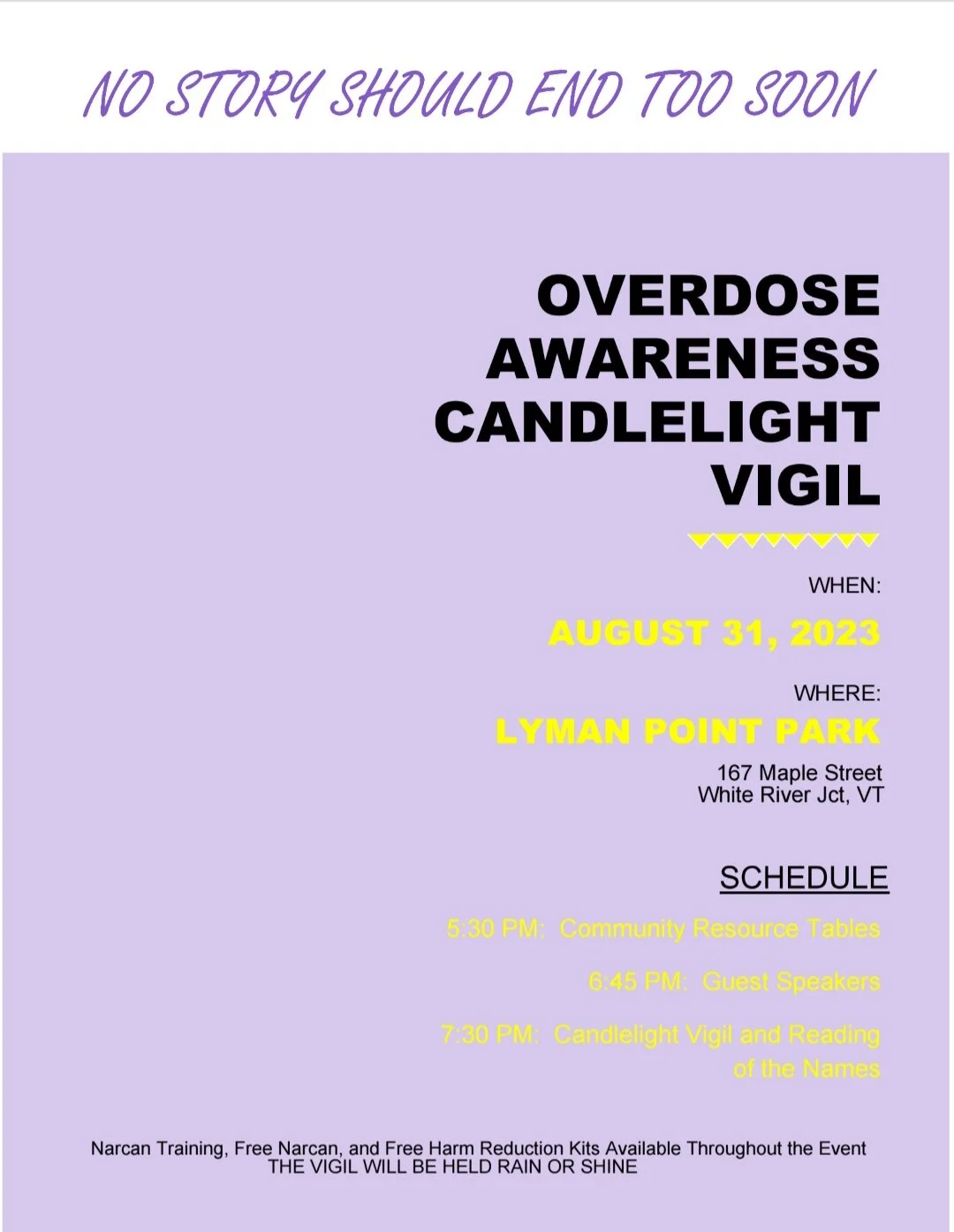
ODawaremnessvigil.jpg

Overdose Awareness day is August 31st. This event will be educational and a time to remember those who we have lost due to an overdose

Read More

2023 WRJ Pride FREE testing event!

2023 WRJ Pride FREE testing event!

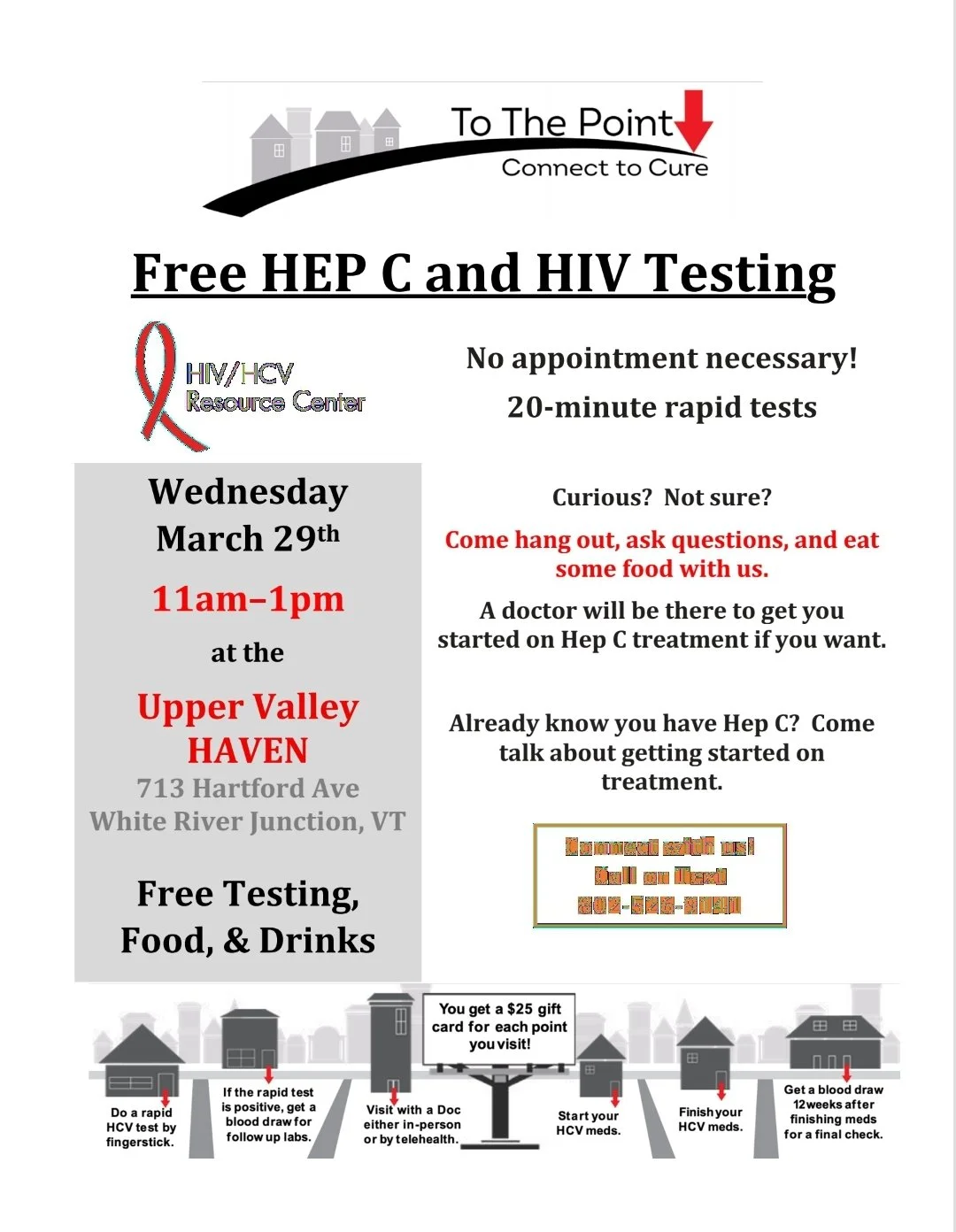
To The Point (TTP) will be hosting a FREE testing event at the WRJ Pride on Saturday July 29, 2023 at the Main Street Museum in WRJ. Have questions? Don’t hesitate to reach out. Were happy to have a conversation with you!

Read More

Screenshot_20230418_091829_PDF Scanner.jpg

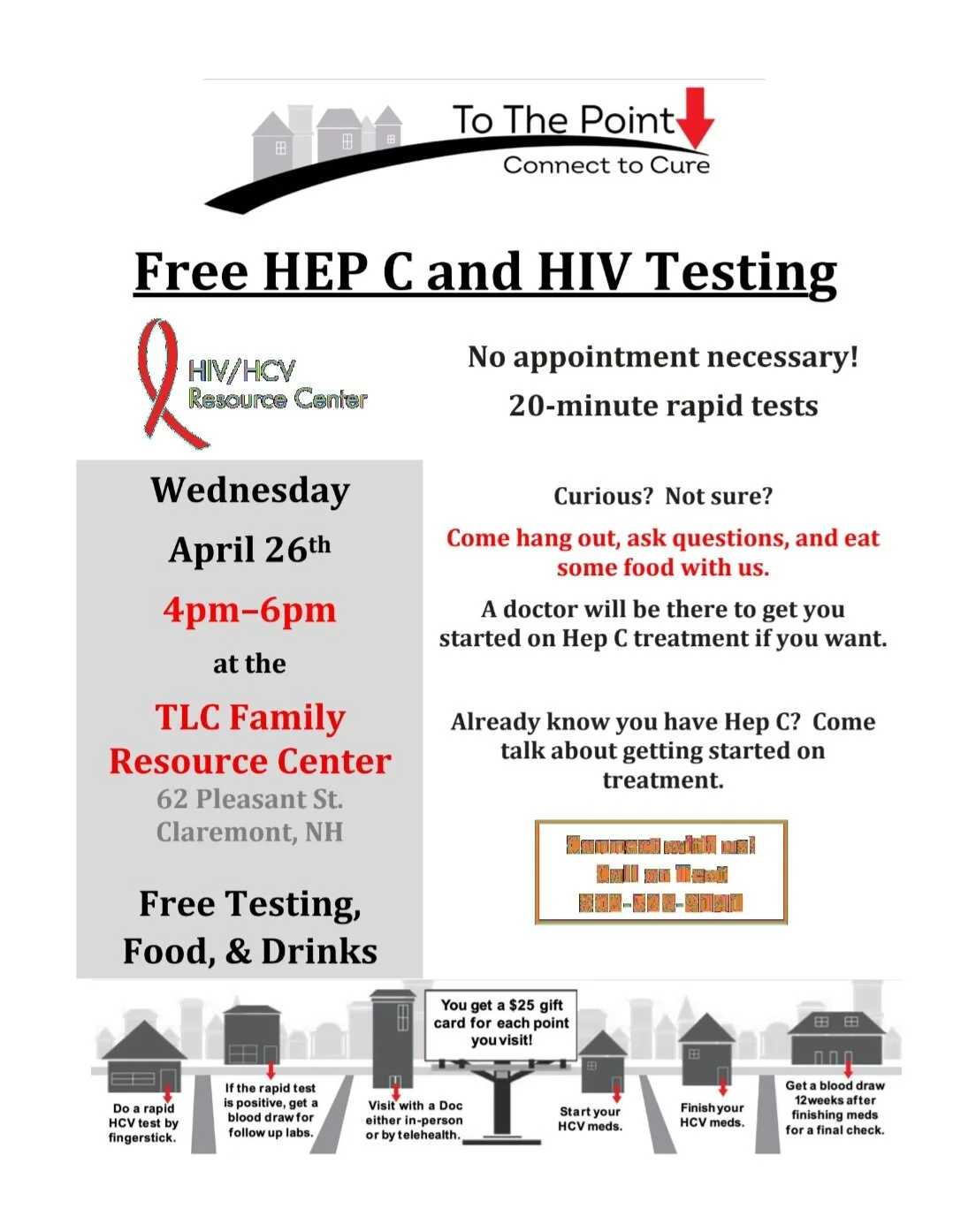
To The Point is holding another testing event on April 26th from 4pm-6pm in Claremont NH at the TLC Family Resource Center.

Are you curious about your HIV or Hep C status? Drop in! This is all FREE and there are incentives for testing. No appointment necessary. If you cant make the event but are still interested in testing please call or text 802-526-9141

Read More

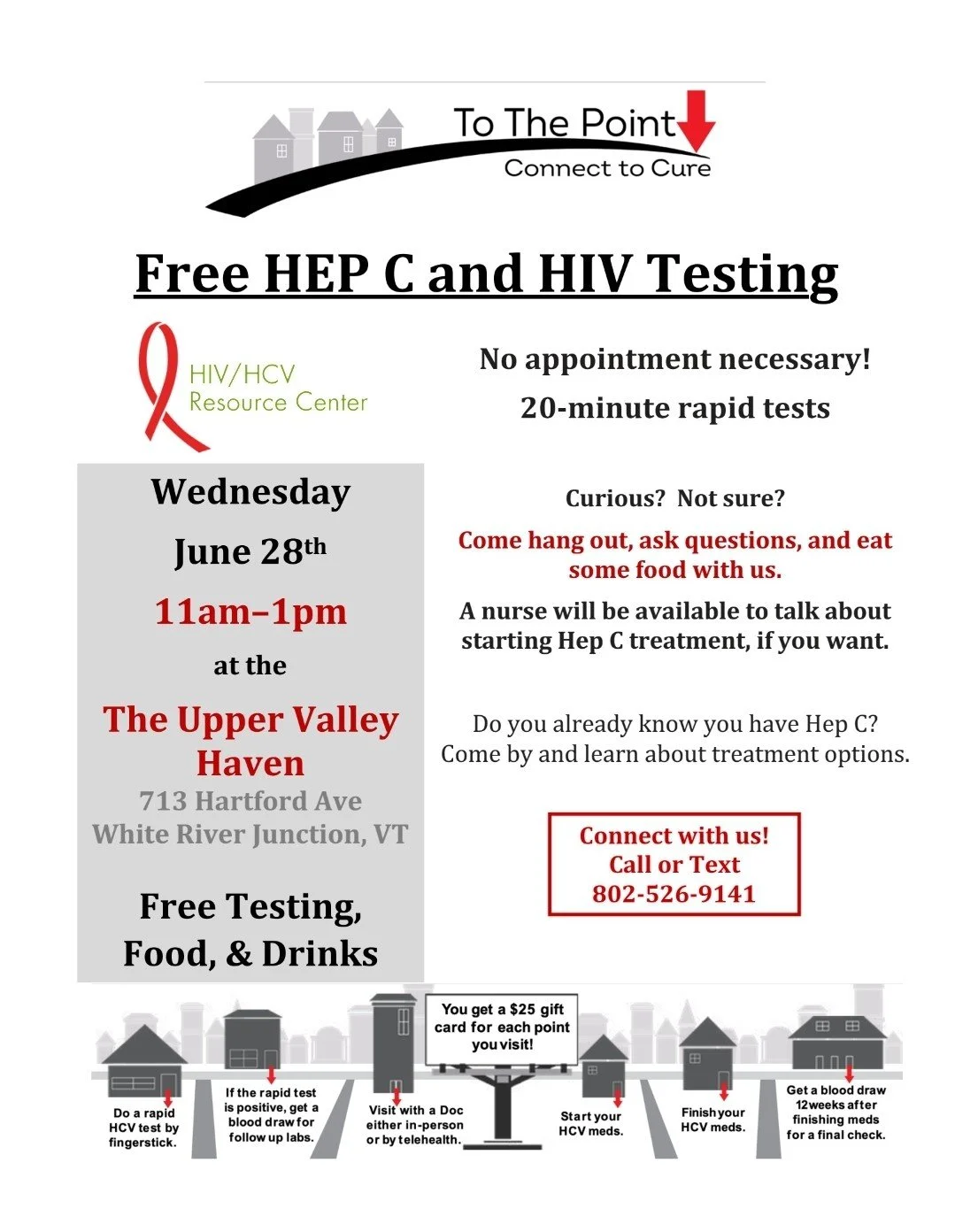
testing.jpg

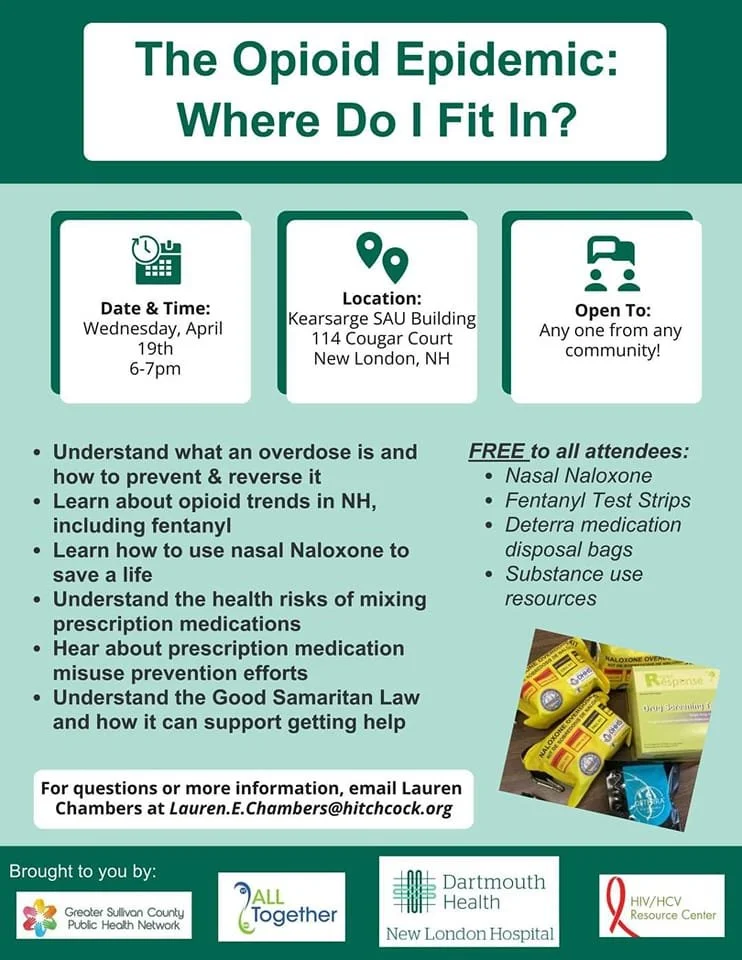
Please join us on April 19th for a discussion about overdose and Narcan training. These events are free and all are welcome!

Read More

Organization getting 'NaloxBoxes' out in public to help reverse overdoses

Organization getting 'NaloxBoxes' out in public to help reverse overdoses

Photo James M. Patterson/Valley News

Story Nora Doyle-Burr/Valley News

Published 2/9/2023

Valley News

Angel Hudson, Vermont medical case manager for HIV/HCV Resource Center, right, talks with Listen Community Services cook Michelle Clogston, left, after restocking a supply of the overdose reversal drug Naloxone at the Listen dining hall in White River Junction, Vt., on Wednesday, Feb. 8, 2023. Clogston, who encounters people using heroin at the community meals, thanked Hudson for making the life-saving drug available.

Read More

How a ‘Perfect Storm’ in New Hampshire Has Fueled an Opioid Crisis

By Katharine Q. Seelye

The New York Times

Jan. 21, 2018

MANCHESTER, N.H. — They sat on plastic chairs in a corner of the Manchester fire station, clutching each other in a desperate farewell.

Justin Lerra was 26 when he turned himself in last summer to the fire department’s “safe station” program, which helps get drug users into treatment. He had been using drugs for seven years. His girlfriend, Sarah, who asked that her last name not be published, was pregnant and had told him that if he didn’t stop using, she would leave him.

Emotional scenes like this play out daily at firehouses in Manchester and Nashua, a measure of how deeply the opioid scourge has ravaged New Hampshire. The state leads the nation in overdose deaths per capita from fentanyl, a powerful synthetic opioid that has virtually replaced heroin across New England. Because fentanyl is so potent, the risk of overdose is high.

In New Hampshire, which President Trump has called a “drug-infested den,” the opioid crisis is almost a statewide obsession.

A man who overdosed after injecting opioids was revived by firefighters and paramedics with two doses of Narcan in Manchester.CreditTodd Heisler/The New York Times

An astonishing 53 percent of adults said in a Granite State poll last year that drugs were the biggest problem facing the state — the first time in the poll’s history that a majority named a single issue as the most important. (Jobs and the economy lagged a distant second.)

While West Virginia leads the nation in overall drug overdose deaths per capita, New Hampshire is essentially tied with Ohio for second place.

Unlike West Virginia, New Hampshire is relatively prosperous, which makes an opioid crisis here seem all the more jarring. This state has the highest median household income in the country, ranks low in unemployment and crime, and often lands at or near the top of lists of the best states in which to live.

Researchers at Dartmouth College in Hanover, N.H., have been studying the issue to try to understand why the state’s opioid problem is so dire.

One big reason, they say, is the proximity to an abundant drug supply in neighboring Massachusetts, the center of drug distribution networks that traffic opioids throughout New England.

Another, they say, is New Hampshire’s low per capita spending on services to help drug users break free from addiction. Nationally, the state, which has no income or sales tax, ranks at the bottom in availability of treatment programs. The fire departments’ safe stations are one effort to fill that void.

The researchers also noted that the state has pockets of “economic degradation,” especially in rural areas where jobs are few, and that may contribute to the problem.

Beyond that, the researchers say, doctors here have long prescribed “significantly higher rates” of opioid pain relievers, almost twice the national average. When the government cracked down on legal painkillers, New Hampshire residents were primed to seek out illegal street drugs.

“This is a kind of perfect storm,” says Lisa A. Marsch, a professor of psychiatry and health policy at Dartmouth’s Geisel School of Medicine and the study’s principal investigator.

“We have highly available, highly potent opioids in New Hampshire,” she says. “And highly limited resources to reduce the risk.”

The researchers noted other factors, too:

• A shortage of workers in addiction and recovery. Northeast states have an average of 15.5 doctors per 100,000 residents who can prescribe Suboxone and other medication-assisted treatments; New Hampshire has seven.

• No needle exchanges, which can reduce the transmission of diseases like hepatitis C and save health care costs. New Hampshire finally legalized needle exchanges in June, long after many other states had done so, but did not fund them. Dartmouth medical students, using donations and grants, opened the first needle exchange last summer in a Claremont, N.H., soup kitchen, but it was shut down in October because it was too close to a school.

• “Live Free or Die.” The researchers said the New Hampshire ethos of “self-sufficiency and individualism” could inhibit some residents from seeking help. And for some, they said, the state’s “Live Free or Die” motto might justify risky behaviors. The state does not require drivers to wear seatbelts. It allows motorcyclists to ride without helmets. And state liquor stores are right on the major highways.

New CDC director aims to end AIDS epidemic in seven years

By Allen Cone

March 30 (UPI) -- The new director of the Centers for Disease Control and Prevention said in a speech the AIDS epidemic could be ended within seven years and pledged to bring the opioid crisis "to its knees."

Dr. Robert Redfield Jr. spoke at a staff meeting of the CDC in Atlanta on Thursday, three days after replacing Dr. Brenda Fitzgerald, who resigned in January after about six months on the job. She reportedly bought shares in tobacco, drug and food companies last year roughly one month into the job.

For 50 minutes, Redfield spoke to staff at the Atlanta headquarters and CDC operations around the country.

Redfield, 65, said he was honored to lead the best "science-based, data-driven agency in the world. I've dreamed of doing this for a long time." The CDC has nearly 12,000 employees worldwide.

"We're not an opinion organization," he said. "That's why CDC has the credibility around the world that it has."

Redfield added: "Academia does not solve problems. Academia is not a service organization."

The former AIDS researcher has spent decades treating people who have HIV.

"Ending the AIDS epidemic in America? It's possible," he said. "I think it could be done in the next three to seven years, if we put our mind to it."

Although there is no effective HIV vaccine, Redfield said existing tools for treating HIV and preventing its spread can stop the U.S. epidemic.

"I've never been an abstinence-only person -- just ask my wife," said Redfield, who is Catholic. "I believe in every measure we have scientific evidence for, including condoms."

Only about 10 percent to 20 percent are using condoms, he noted. In 2016, nearly 40,000 people in the United States were diagnosed with HIV. The CDC reported 12,497 people died with AIDS in the United States in 2015.

He pledged that CDC would play a key role in other agencies in the Department of Health and Human Services in dealing with opioid misuse and abuse, which he called "the public health crisis of our time." He said they will work on "bringing it to its knees."

Opioids killed more than 42,000 people in 2016, more than any year on record, according to the CDC. And 40 percent of all opioid overdose deaths involve a prescription opioid.

"If any of you have tried to access care for addiction in this nation, I can guarantee you it's complicated," he said. "It needs to not be complicated."

Redfield also said emergency preparedness to protect "the health of the American public from that which we don't expect" is the agency's top mission. He called a pandemic influenza "my biggest fear." And he wants the CDC to be "100 percent prepared" for new or re-emerging infectious diseases threat or bioterrorism.

"I pray it doesn't happen on our watch. But I want to make sure we're all prepared, whether it's flu -- my biggest fear -- or MERS or something else," he said, referring to the viral Middle East respiratory syndrome.

"I respect the mission we have, which is to be prepared for what we don't expect."

Marijuana legalization could help offset opioid epidemic, studies find

By Mark Lieber, CNN

(CNN)Experts have proposed using medical marijuana to help Americans struggling with opioid addiction. Now, two studies suggest that there is merit to that strategy.

The studies, published Monday in the journal JAMA Internal Medicine, compared opioid prescription patterns in states that have enacted medical cannabis laws with those that have not. One of the studies looked at opioid prescriptions covered by Medicare Part D between 2010 and 2015, while the other looked at opioid prescriptions covered by Medicaid between 2011 and 2016.

The researchers found that states that allow the use of cannabis for medical purposes had 2.21 million fewer daily doses of opioids prescribed per year under Medicare Part D, compared with those states without medical cannabis laws. Opioid prescriptions under Medicaid also dropped by 5.88% in states with medical cannabis laws compared with states without such laws, according to the studies.

    "This study adds one more brick in the wall in the argument that cannabis clearly has medical applications," said David Bradford, professor of public administration and policy at the University of Georgia and a lead author of the Medicare study.

    "And for pain patients in particular, our work adds to the argument that cannabis can be effective."

    Medicare Part D, the optional prescription drug benefit plan for those enrolled in Medicare, covers more than 42 million Americans, including those 65 or older. Medicaid provides health coverage to more than 73 million low-income individuals in the US, according to the program's website.

    "Medicare and Medicaid publishes this data, and we're free to use it, and anyone who's interested can download the data," Bradford said. "But that means that we don't know what's going on with the privately insured and the uninsured population, and for that, I'm afraid the data sets are proprietary and expensive."

    'This crisis is very real'

    The new research comes as the United States remains entangled in the worst opioid epidemic the world has ever seen. Opioid overdose has risen dramatically over the past 15 years and has been implicated in over 500,000 deaths since 2000 -- more than the number of Americans killed in World War II.

    "As somebody who treats patients with opioid use disorders, this crisis is very real. These patients die every day, and it's quite shocking in many ways," said Dr. Kevin Hill, an addiction psychiatrist at Beth Israel Deaconess Medical Center and an assistant professor of psychiatry at Harvard Medical School, who was not involved in the new studies.

    "We have had overuse of certain prescription opioids over the years, and it's certainly contributed to the opioid crisis that we're feeling," he added. "I don't think that's the only reason, but certainly, it was too easy at many points to get prescriptions for opioids."

    Today, more than 90 Americans a day die from opioid overdose, resulting in more than 42,000 deaths per year, according to the US Centers for Disease Control and Prevention. Opioid overdose recently overtook vehicular accidents and shooting deaths as the most common cause of accidental death in the United States, the CDC says.

    Like opioids, marijuana has been shown to be effective in treating chronic pain as well as other conditions such as seizures, multiple sclerosis and certain mental disorders, according to the National Institute on Drug Abuse. Research suggests that the cannabinoid and opioid receptor systems rely on common signaling pathways in the brain, including the dopamine reward system that is central to drug tolerance, dependence and addiction.

    "All drugs of abuse operate using some shared pathways. For example, cannabinoid receptors and opioid receptors coincidentally happen to be located very close by in many places in the brain," Hill said. "So it stands to reason that a medication that affects one system might affect the other."

    But unlike opioids, marijuana has little addiction potential, and virtually no deaths from marijuana overdose have been reported in the United States, according to Bradford.

    "No one has ever died of cannabis, so it has many safety advantages over opiates," Bradford said. "And to the extent that we're trying to manage the opiate crisis, cannabis is a potential tool."

    Comparing states with and without medical marijuana laws

    In order to evaluate whether medical marijuana could function as an effective and safe alternative to opioids, the two teams of researchers looked at whether opioid prescriptions were lower in states that had active medical cannabis laws and whether those states that enacted these laws during the study period saw reductions in opioid prescriptions.

    Both teams, in fact, did find that opioid prescriptions were significantly lower in states that had enacted medical cannabis laws. The team that looked at Medicaid patients also found that the four states that switched from medical use only to recreational use -- Alaska, Colorado, Oregon and Washington -- saw further reductions in opioid prescriptions, according to Hefei Wen, assistant professor of health management and policy at the University of Kentucky and a lead author on the Medicaid study.

    "We saw a 9% or 10% reduction (in opioid prescriptions) in Colorado and Oregon," Wen said. "And in Alaska and Washington, the magnitude was a little bit smaller but still significant."

    The first state in the United States to legalize marijuana for medicinal use was California, in 1996. Since then, 29 states and the District of Columbia have approved some form of legalized cannabis. All of these states include chronic pain -- either directly or indirectly -- in the list of approved medical conditions for marijuana use, according to Bradford.

    The details of the medical cannabis laws were found to have a significant impact on opioid prescription patterns, the researchers found. States that permitted recreational use, for example, saw an additional 6.38% reduction in opioid prescriptions under Medicaid compared with those states that permitted marijuana only for medical use, according to Wen.

    The method of procurement also had a significant impact on opioid prescription patterns. States that permitted medical dispensaries -- regulated shops that people can visit to purchase cannabis products -- had 3.742 million fewer opioid prescriptions filled per year under Medicare Part D, while those that allowed only home cultivation had 1.792 million fewer opioid prescriptions per year.

    "We found that there was about a 14.5% reduction in any opiate use when dispensaries were turned on -- and that was statistically significant -- and about a 7% reduction in any opiate use when home cultivation only was turned on," Bradford said. "So dispensaries are much more powerful in terms of shifting people away from the use of opiates."

    The impact of these laws also differed based on the class of opioid prescribed. Specifically, states with medical cannabis laws saw 20.7% fewer morphine prescriptions and 17.4% fewer hydrocodone prescriptions compared with states that did not have these laws, according to Bradford.

    Fentanyl prescriptions under Medicare Part D also dropped by 8.5% in states that had enacted medical cannabis laws, though the difference was not statistically significant, Bradford said. Fentanyl is a synthetic opioid, like heroin, that can be prescribed legally by physicians. It is 50 to 100 times more potent than morphine, and even a small amount can be fatal, according to the National Institute on Drug Abuse.

    "I know that many people, including the attorney general, Jeff Sessions, are skeptical of cannabis," Bradford said. "But, you know, the attorney general needs to be terrified of fentanyl."

    'A call to action'

    This is not the first time researchers have found a link between marijuana legalization and decreased opioid use. A 2014 study showed that states with medical cannabis laws had 24.8% fewer opioid overdose deaths between 1999 and 2010. A study in 2017 also found that the legalization of recreational marijuana in Colorado in 2012 reversed the state's upward trend in opioid-related deaths.

    "There is a growing body of scientific literature suggesting that legal access to marijuana can reduce the use of opioids as well as opioid-related overdose deaths," said Melissa Moore, New York deputy state director for the Drug Policy Alliance. "In states with medical marijuana laws, we have already seen decreased admissions for opioid-related treatment and dramatically reduced rates of opioid overdoses."

    Some skeptics, though, argue that marijuana legalization could actually worsen the opioid epidemic. Another 2017 study, for example, showed a positive association between illicit cannabis use and opioid use disorders in the United States. But there may be an important difference between illicit cannabis use and legalized cannabis use, according to Hill.

    "As we have all of these states implementing these policies, it's imperative that we do more research," Hill said. "We need to study the effects of these policies, and we really haven't done it to the degree that we should."

    The two recent studies looked only at patients enrolled in Medicaid and Medicare Part D, meaning the results may not be generalizable to the entire US population.

    But both Hill and Moore agree that as more states debate the merits of legalizing marijuana in the coming months and years, more research will be needed to create consistency between cannabis science and cannabis policy.

    "There is a great deal of movement in the Northeast, with New Hampshire and New Jersey being well-positioned to legalize adult use," Moore said. "I believe there are also ballot measures to legalize marijuana in Arizona, Florida, Missouri, Nebraska and South Dakota as well that voters will decide on in Fall 2018."

    Hill called the new research "a call to action" and added, "we should be studying these policies. But unfortunately, the policies have far outpaced the science at this point."

    ‘Our greatest fear’: Highly drug-resistant gonorrhea confirmed by health officials

    A super-resistant strain of gonorrhea has been reported in the United Kingdom following warnings from global public health officials that the common sexually transmitted disease is becoming more difficult to treat.

    Health officials in England said it is the first time that a case of gonorrhea could not be treated successfully with antibiotics that are commonly used to cure it.

    Earlier this year, a man, who was not named, sought treatment there for symptoms that he developed about a month after he had sexual contact with a woman in Southeast Asia, according to a case report from Public Health England. The bacterial infection was treated with two antibiotics, azithromycin and ceftriaxone, but subsequent tests still came back positive for the disease, the officials said.

    “This is the first time a case has displayed such high-level resistance to both of these drugs and to most other commonly used antibiotics,” Gwenda Hughes, who leads the sexually transmitted infection section at Public Health England, said Wednesday in a statement.

    Gonorrhea, which is caused by the bacterium, Neisseria gonorrhoeae, is one of the most common sexually transmitted diseases around the world.

    Each year, there are an estimated 78 million cases across the globe — about 820,000 of which are reported in the United States, according to data from the Centers for Disease Control and Prevention and the World Health Organization.

    But public health officials said it is becoming more and more resistant to drugs.

    Teodora Wi, medical officer of human reproduction at WHO, said in a news release last year that the bacteria that cause gonorrhea are highly intelligent, explaining that “every time we use a new class of antibiotics to treat the infection, the bacteria evolve to resist them.”

    It's not certain how the patient in England contracted the super-resistant strain. Although he had contact with a woman in Asia, he also had one female partner in the United Kingdom, according to the recent report from Public Health England. She avoided infection.

    Following treatment, a throat swab revealed that the man's infection was still present.

    The patient was then treated intravenously with another antibiotic called ertapenem, and preliminary tests show that the medication may be working.

    He will be tested again next month.

    “We are following up this case to ensure that the infection was effectively treated with other options and the risk of any onward transmission is minimized,” Hughes, with Public Health England, said in the statement. “PHE actively monitors, and acts on, the spread of antibiotic resistance in gonorrhea and potential treatment failures, and has introduced enhanced surveillance to identify and manage resistant strains of infection promptly to help reduce further spread.”

    David Harvey, executive director of the National Coalition of STD Directors, said that the report “is one more confirmation of our greatest fear: drug-resistant gonorrhea spreading around the globe.”

    “Here in the U.S. and around the globe, we have to take drug-resistant gonorrhea seriously in order to invest in finding new cures and preventing infections,” he said, according to CNN. “Working together, funding must be radically increased to combat this and other life-threatening STDs.”

    Oftentimes, there are no signs or symptoms associated with gonorrhea but, when symptoms do occur, they can include pain while urinating, abnormal discharge from the genitals and, with women, pain during sexual intercourse, among other things, according to the Mayo Clinic.

    Medical experts warn that when the condition is not treated, it can sometimes lead to infertility in both men and women, other infections throughout the body, as well as an increased risk of HIV/AIDS.

    The Mayo Clinic recommends that people and their sexual partners use prophylactics and undergo regular STD screenings to monitor for infections.

    “It is better to avoid getting or passing on gonorrhea in the first place,” Hughes said, “and everyone can significantly reduce their risk by using condoms consistently and correctly with all new and casual partners


    Lindsey Bever is a general assignment reporter for The Washington Post, covering national news with an emphasis on health. She was previously a reporter at the Dallas Morning News.


    New drug capsule may allow weekly HIV treatment

    Researchers at MIT and Brigham and Women's Hospital have developed a capsule that can deliver a week's worth of HIV drugs in a single dose. This advance could make it much easier for patients to adhere to the strict schedule of dosing required for the drug cocktails used to fight the virus, the researchers say.

    The new capsule is designed so that patients can take it just once a week, and the drug will release gradually throughout the week. This type of delivery system could not only improve patients' adherence to their treatment schedule but also be used by people at risk of HIV exposure to help prevent them from becoming infected, the researchers say.

    "One of the main barriers to treating and preventing HIV is adherence," says Giovanni Traverso, a research affiliate at MIT's Koch Institute for Integrative Cancer Research and a gastroenterologist and biomedical engineer at Brigham and Women's Hospital. "The ability to make doses less frequent stands to improve adherence and make a significant impact at the patient level."

    Traverso and Robert Langer, the David H. Koch Institute Professor at MIT, are the senior authors of the study, which appears in the Jan. 9 issue of Nature Communications. MIT postdoc Ameya Kirtane and visiting scholar Omar Abouzid are the lead authors of the paper.

    Scientists from Lyndra, a company that was launched to develop this technology, also contributed to the study. Lyndra is now working toward performing a clinical trial using this delivery system.

    "We are all very excited about how this new drug-delivery system can potentially help patients with HIV/AIDS, as well as many other diseases," Langer says.

    "A pillbox in a capsule"

    Although the overall mortality rate of HIV has dropped significantly since the introduction of antiretroviral therapies in the 1990s, there were 2.1 million new HIV infections and 1.2 million HIV-related deaths in 2015.

    Several large clinical trials have evaluated whether antiretroviral drugs can prevent HIV infection in healthy populations. These trials have had mixed success, and one major obstacle to preventative treatment is the difficulty in getting people to take the necessary pills every day.

    The MIT/BWH team believed that a drug delivery capsule they developed in 2016 might help to address this problem. Their capsule consists of a star-shaped structure with six arms that can be loaded with drugs, folded inward, and encased in a smooth coating. After the capsule is swallowed, the arms unfold and gradually release their cargo.

    In a previous study, the researchers found that these capsules could remain in the stomach for up to two weeks, gradually releasing the malaria drug ivermectin. The researchers then set out to adapt the capsule to deliver HIV drugs.

    In their original version, the entire star shape was made from one polymer that both provides structural support and carries the drug payload. This made it more difficult to design new capsules that would release drugs at varying rates, because any changes to the polymer composition might disrupt the capsule's structural integrity.

    To overcome that, the researchers designed a new version in which the backbone of the star structure is still a strong polymer, but each of the six arms can be filled with a different drug-loaded polymer. This makes it easier to design a capsule that releases drugs at different rates.

    "In a way, it's like putting a pillbox in a capsule. Now you have chambers for every day of the week on a single capsule," Traverso says.

    Tests in pigs showed that the capsules were able to successfully lodge in the stomach and release three different HIV drugs over one week. The capsules are designed so that after all of the drug is released, the capsules disintegrate into smaller components that can pass through the digestive tract.

    Preventing infection

    Working with the Institute for Disease Modeling in Bellevue, Washington, the researchers tried to predict how much impact a weekly drug could have on preventing HIV infections. They calculated that going from a daily dose to a weekly dose could improve the efficacy of HIV preventative treatment by approximately 20 percent. When this figure was incorporated into a computer model of HIV transmission in South Africa, the model showed that 200,000 to 800,000 new infections could be prevented over the next 20 years.

    "A longer-acting, less invasive oral formulation could be one important part of our future arsenal to stop the HIV/AIDS pandemic," says Anthony Fauci, director of the National Institute of Allergy and Infectious Disease, which partly funded the research.

    "Substantial progress has been made to advance antiretroviral therapies, enabling a person living with HIV to achieve a nearly normal lifespan and reducing the risk of acquiring HIV. However, lack of adherence to once-daily therapeutics for infected individuals and pre-exposure prophylaxis (PrEP) for uninfected at-risk people remain a key challenge. New and improved tools for HIV treatment and prevention, along with wider implementation of novel and existing approaches, are needed to end the HIV pandemic as we know it. Studies such as this help us move closer to achieving this goal," Fauci says.

    The MIT/BWH team is now working on adapting this technology to other diseases that could benefit from weekly drug dosing. Because of the way that the researchers designed the polymer arms of the capsule, it is fairly easy to swap different drugs in and out, they say.

    "To put other drugs onto the system is significantly easier because the core system remains the same," Kirtane says. "All we need to do is change how slowly or how quickly it will be released."

    The researchers are also working on capsules that could stay in the body for much longer periods of time.

    The research was also funded by the Bill and Melinda Gates Foundation, Bill and Melinda Gates through the Global Good Fund, the National Institutes of Health, and the Division of Gastroenterology at Brigham and Women's Hospital.

    Story Source:

    Materials provided by Massachusetts Institute of Technology. Original written by Anne Trafton. Note: Content may be edited for style and length.

    Journal Reference:

    1. Ameya R. Kirtane, Omar Abouzid, Daniel Minahan, Taylor Bensel, Alison L. Hill, Christian Selinger, Anna Bershteyn, Morgan Craig, Shirley S. Mo, Hormoz Mazdiyasni, Cody Cleveland, Jaimie Rogner, Young-Ah Lucy Lee, Lucas Booth, Farhad Javid, Sarah J. Wu, Tyler Grant, Andrew M. Bellinger, Boris Nikolic, Alison Hayward, Lowell Wood, Philip A. Eckhoff, Martin A. Nowak, Robert Langer, Giovanni Traverso. Development of an oral once-weekly drug delivery system for HIV antiretroviral therapy. Nature Communications, 2018; 9 (1) DOI: 10.1038/s41467-017-02294-6

    Cite This Page:

    Massachusetts Institute of Technology. "New drug capsule may allow weekly HIV treatment: Replacing daily pills with a weekly regimen could help patients stick to their dosing schedule." ScienceDaily. ScienceDaily, 9 January 2018. <www.sciencedaily.com/releases/2018/01/180109153443.htm>.

    ‘I don’t feel like I’m a threat anymore.’ New HIV guidelines are changing lives.

    by Lenny Bernstein

    Last year, Chris Kimmenez and his wife asked their doctors a simple question. Could Chris, who has been HIV positive since 1989 but keeps the virus in check through medication, transmit it sexually to Paula?

    They were pretty sure they knew the answer. Married for more than 30 years, they had not always practiced safe sex, but Paula showed no signs of having the virus.

    Their physicians were less certain. "They had a conversation, and they did some research on it," Kimmenez said. "They came back to us and said there may still be a risk, but we're comfortable enough" that unprotected sex is safe.

    "We knew that all along," said Kimmenez, 56, who works with ex-offenders in Philadelphia.

    Simple acknowledgments like that one, spoken quietly in the privacy of doctors' offices, mark the arrival of a historic moment in the history of HIV: Medical authorities are publicly agreeing that people with undetectable viral loads cannot transmit the virus that causes AIDS.

    The policy change has profound implications for the way people view HIV. The change promises not just unprotected sex for couples like Kimmenez and his wife, but also reduced stigma for the 1.2 million Americans living with HIV. The policy change also offers the hope that more people will be tested and begin treatment if they are found to have the virus rather than live in denial.

    "There was something in me that said I'm damaged and I made a mistake, and people see it and I'm a danger," said Mark S. King, 56, a writer and activist who tested positive for HIV in 1985. But now, treatment has fully suppressed the virus. "When I finally internalized this message . . . something suddenly lifted off of me that is hard to describe. It was almost as if someone wiped me clean. I no longer feel like this diseased pariah."

    Once considered a death sentence, HIV infection can now be managed via medication, much like chronic diseases such as diabetes, and people with the virus live full lives. The rate of new infections in the United States dropped by 10 percent from 2010 to 37,600 in 2014, according to the U.S. Centers for Disease Control and Prevention. Fewer than 7,000 people died of HIV/AIDSthat year.

    In July, Anthony S. Fauci, head of the National Institute of Allergy and Infectious Diseases and one of the world's leading authorities on HIV, publicly agreed at an international conference that people with undetectable viral loads in their blood cannot transmit the virus.

    On Sept. 27, the CDC followed, releasing a letter that said people who take medication daily "and achieve and maintain an undetectable viral load have effectively no risk of sexually transmitting the virus to an HIV-negative partner."

    The influential British medical journal the Lancet HIV endorsed the idea in an editorial this month. All told, more than 500 organizations in 67 countries now agree, according to Bruce Richman, who is leading the "Undetectable = Untransmittable" (U=U) campaign credited with beginning to change public perception of HIV transmissibility.

    A recent breakthrough in HIV research shows patients who are taking their medicine, and have no detectable signs of HIV, cannot transfer the virus to others. (Joyce Koh/The Washington Post)

    Like many developments in the four-decade history of HIV, this one has been slow to gain acceptance among mainstream health-care providers. Many are not aware of it or must unlearn the habit of drilling safe-sex lessons into patients, as they have been doing almost since the AIDS epidemic began. HIV-positive people also must alter deeply ingrained beliefs that nothing good can come of revealing their status.

    The change in philosophy also has sparked concerns, for which there is some evidence, that more condomless sex will lead to an increase in other sexually transmitted infections. And experts acknowledge that a few people whose viral load is not truly suppressed will eventually transmit HIV to others.

    Laws in many states also are out of date. Many still criminalize the failure to reveal HIV status to a sex partner, even when there is no danger of transmissibility.

    But on balance, authorities said, the agreement that people with HIV can prevent sexual transmission by taking a single pill each day is nothing less than revolutionary.

    "Nothing is completely risk-free," Fauci said in an interview. "What the community feels is that all of the good that will come from the lack of social stigmatization" is worth the risk. "This means a lot to them. This has a lot to do with their self-worth, their identity."

    An undetectable viral load is defined as fewer than 200 copies of the virus in a milliliter of blood. Generally, people with HIV should maintain that level or a lower level for six months before beginning to consider themselves incapable of transmitting the virus sexually.

    Many who faithfully take antiretroviral medication and lead healthy lifestyles can bring their viral loads considerably lower, to 50 or even 25 copies.

    But progress raises other questions, said Jonathan Mermin, director of the CDC's National Center for HIV/AIDS, Viral Hepatitis, STD, and TB Prevention. What if a person forgets to take medication for one day? What about two, or more? How long after resuming therapy should someone wait before once again considering himself or herself incapable of transmitting the virus? And what about people who go above and below the 200-copy threshold over time? Studies show that to be the case for about 10 percent of the people with HIV, Mermin said.

    As yet, there are no evidence-based answers to these questions, he said. "The public-health challenge now is moving from theory to implementation," he said. "Many questions arise following the information that when a person with HIV has an undetectable viral load, he has effectively no risk of transmitting the virus."

    In 2008, Swiss experts announced that those with undetectable levels of HIV could not transmit HIV through sex. But the world was not ready to hear the message then.

    Starting in 2011, three large studies confirmed the idea, tracking more than 75,000 vaginal and anal condomless sex acts without finding a single HIV transmission to an HIV-negative partner from someone whose viral load was undetectable. The initial 2011 study was named "breakthrough of the year" by Science magazine.

    Now the challenge is to get the message out to HIV-positive people, caregivers and the public. And that process has been slow.

    "I would tell everyone about this, friends and family and people I wanted to date, and I was coming across so much resistance, because major institutions were saying this is wrong," Richman said.

    He launched U=U last year, initially a lonely and sometimes controversial campaign to let the world know something that many people with HIV had concluded for themselves. His breakthrough moment came in August 2016 when New York City's health department signed on. Soon, other cities and organizations were joining.

    Still, the message is moving mainly from people with HIV to health authorities and policymakers, rather than in the other direction, Richman said.

    "This is a radical challenge to the status quo and to 35 years of HIV and fear of people living with HIV," Richman said.

    Brigitte Charbonneau, 71, of Ottawa, found out this year that she could not transmit the virus after 23 years of being HIV positive. "I thought, 'My God, I've been living with my man for 20 years, and we've been using condoms,' " the retired hairdresser recalled. "And I phoned him right that afternoon."

    Jennifer Vaughan of Watsonville, Calif., vividly remembers the moment she learned she could not transmit the virus to her boyfriend. The mother of three tested positive in February 2016 after she became critically ill with what was finally determined to be AIDS. HIV was not among the possibilities she or her doctors considered, until a blood test revealed the virus. She thinks she was infected by a previous boyfriend with a history of intravenous drug use.

    Vaughan attended a speech Richman gave and was talking with him in a parking lot outside a Starbucks.

    "I'll never forget him saying those words, 'You can't transmit the virus if you're undetectable,' " the 47-year-old substitute teacher recalled. "And I said, 'Wait, what?'

    "It was like the sky opened. Are you kidding? There's, like, zero risk? I don't feel like I'm a threat anymore. I don't feel like I'm dirty. I don't feel like I'm a dangerous person."

    Courtesy:  The Washington Post

    He Took a Drug to Prevent AIDS. Then He Couldn’t Get Disability Insurance

    By Donald G. McNeil Jr.

    Feb. 12, 2018

    [Update: State financial regulators in New York said that they would investigate reports that gay men have been denied insurance policies covering life, disability or long-term care because they were taking PrEP.]

    Three years ago, Dr. Philip J. Cheng, a urology resident at Harvard’s Brigham and Women’s Hospital, nicked himself while preparing an H.I.V.-positive patient for surgery.

    Following hospital protocol, he took a one-month course of Truvada, a cocktail of two anti-H.I.V. drugs, to prevent infection. Later, because he was an unattached gay man, he decided to keep taking Truvada to protect himself from getting H.I.V. through sex.

    The practice — called PrEP, short for pre-exposure prophylaxis — is safe and highly effective. Several studies have shown that users who take the drug daily are at nearly zero risk of H.I.V. infection.

    But when Dr. Cheng applied for disability insurance — which many young doctors do to protect a lifetime’s worth of income should they be hurt — he was told that, because he was taking Truvada, he could have only a five-year policy.

    Dr. Cheng is healthy, has never had surgery or been hospitalized, and takes no other medication. “And I never engaged in sexually irresponsible behavior,” he said. “I’ve always been in longer-term monogamous relationships.”

    “I was really shocked,” he added. “PrEP is the responsible thing to do. It’s the closest thing we have to an H.I.V. vaccine.”

    Unable to get the company to change its decision — even after he offered to sign a waiver voiding his policy should he become H.I.V.-infected — he did what some other gay men in similar situations have been forced to do. He stopped taking Truvada.

    He then applied to a different insurer — and was offered a lifetime disability policy.

    There are nearly 800 life insurers in this country, according to the American Council of Life Insurers. There are no national figures on how many of them have denied coverage to men because they take PrEP.

    But insurance brokers, gay-rights advocates and staff at medical clinics said in interviews they had heard of numerous such cases. H.I.V. specialists say the denials endanger men’s lives by encouraging them to drop PrEP if they need life, disability or long-term-care insurance.

    By contrast, health insurance companies usually cover PrEP, which the Centers for Disease Control and Prevention endorsed in 2014 for anyone at substantial risk of H.I.V., which includes any gay or bisexual man who might have sex without a condom with anyone of unknown H.I.V. status.

    The denials turn the insurance industry’s risk-management standard on its head: men who do not protect themselves can get policies, while men who do cannot.

    “It doesn’t make any sense,” said Dr. Anthony S. Fauci, director of the National Institute of Allergy and Infectious Diseases, and perhaps the nation’s best-known AIDS doctor. “It ought to be the other way around.”

    Dr. Robert M. Grant, the AIDS researcher at the University of California, San Francisco, who led the clinical trial that established the value of PrEP, said such denials “really are silly — it’s like refusing to insure someone because they use seatbelts.”

    Moreover, advocates argue, the practice singles out gay men for discriminatory treatment. Women, for instance, are not denied coverage if they use birth control pills or get the vaccine against human papillomavirus, which can cause cervical cancer. Yet like Truvada, use of these drugs suggests an active sex life, with the accompanying risks.

    And insurers routinely cover applicants with actual diseases controlled by medications, including diabetes, epilepsy, high blood pressure and bipolar disorder.

    Bennett Klein, a lawyer for GLAD (GLBTQ Legal Advocates and Defenders), based in Boston, said he knew of 14 instances in which companies denied life insurance, long-term-care insurance or disability insurance to gay men on PrEP, or told brokers they would do so if asked.

    Courtney Mulhern-Pearson, policy director for The San Francisco AIDS Foundation, said denial of life insurance to men on PrEP was “an increasing trend.”

    When companies did offer explanations, they said applicants were turned down because the company believed they must be engaging in high-risk sexual behavior.

    When she explained to some insurers that PrEP was protective, regardless of behavior, “there seemed to be an understanding,” she said. “But so far I haven’t seen any policy changes.”

    Dr. Cheng’s stethoscope at home. He said his insurer claimed not to know about Truvada’s side effects, even though it was approved in 2004.CreditKayana Szymczak for The New York Times

    The foundation considers the practice discriminatory, and Ms. Mulhern-Pearson has requested a meeting with California’s state insurance department “to see if there’s anything we can do legislatively or through regulation.”

    The Times contacted the A.C.L.I., the industry’s trade association, and four of the companies named by Mr. Klein, sending each detailed questions about underwriting policies related to Truvada and the sexual habits of applicants, and what other medical conditions caused them to deny coverage.

    An A.C.L.I. spokesman said the council did not collect such information from members.

    For competitive reasons, companies do not publicize their underwriting standards and often do not explain why they deny an individual policy. Each policy is denied — or offered at a higher price or shorter term — based on many medical factors, including weight, blood pressure, cholesterol, smoking status and so on.

    Mutual of Omaha, which Mr. Klein is suing for denying long-term-care insurance to an unnamed gay man, declined to answer any questions and said it did not comment on pending litigation.

    In motions filed in GLAD’s suit, Mutual of Omaha conceded that it had denied an applicant coverage because he took Truvada.

    The drug is indicated only for persons with H.I.V. or at high risk of acquiring H.I.V., the company said. Therefore it turned down everyone taking Truvada.

    “The fact that the drug is less than 100 percent effective adds yet another layer to the risk profile,” the company added.

    According to internal underwriting guidelines obtained by Mr. Klein, Mutual of Omaha sells long-term-care policies to people with Addison’s disease, bipolar disorder, depression, mild coronary artery disease, diabetes, epilepsy and high blood pressure, as long as they are controlled by medication for various periods, from six months up to three years.

    It also insures former alcoholics who were alcohol-free and in support groups, as well as people who had recovered from heart valve surgery or cancers of the bladder, breast, prostate and skin.

    “The irrationality is enough to make your mind spin,” Mr. Klein said.

    Other insurers replied to The Times’s questions with brief answers saying they did not deny coverage solely for taking PrEP but declining to describe what conditions or behaviors would cause them to exclude coverage.

    A spokesman for Lincoln National Life, in Fort Wayne, Ind., said it had approved policies for men on PrEP and had offered some lower rates reserved for low-risk clients. A spokesman was unsure when the company began doing so.

    A spokeswoman for Principal National Life in Des Moines said the company “doesn’t decline individuals just because they’re taking Truvada” and did not quiz applicants about their sexual history. She declined to answer further questions.

    A spokeswoman for Protective Life Insurance of Birmingham, Ala., said it “did not deny coverage based solely on Truvada use,” and might even offer a low-risk rate to someone taking the drug. She, too, declined to answer further questions.

    Mr. Klein said he had sometimes heard similar answers from insurers even as men are denied coverage.

    “I am fairly certain that this is just slippery language, and that they are excluding applicants when they see a diagnosis of ‘high risk sexual behavior’ or ‘exposure to H.I.V.’ in an applicant’s medical record.”

    Those descriptions are linked to diagnostic codes that doctors use for reimbursement from health insurers when a patient asks for a prescription for Truvada. “That’s no different from excluding based on PrEP usage alone,” Mr. Klein argued.

    Aaron E. Baldwin, a financial planner in San Francisco who specializes in clients living with H.I.V., said he had been seeing such denials for three years.

    Some clients denied coverage, he said, were young executives with large student debts who wanted insurance so that should anything happen to them, their parents would not be saddled with payments.

    In his experience, Mr. Baldwin said, companies in Midwestern and Southern states were reluctant to insure men taking Truvada, while Prudential, for example, insured even men with H.I.V. as long as they could show they took their medications every day.

    In his case, Dr. Cheng said, a broker told him that the insurer claimed to be unsure about Truvada’s side effects. But the drug was approved by the Food and Drug Administration in 2004, and a study published in 2016 concluded that it was safer for long-term use than aspirin, which can cause gastrointestinal bleeding.

    Dr. Cheng is now in a long-term relationship with an H.I.V.-negative man, and so he no longer takes Truvada. But the sting of his insurance denial lingers.

    “It was blatant discrimination,” he said.

    Correction: February 12, 2018

    An earlier version of this article misstated the name of a company that provides insurance to men with H.I.V. It was Prudential, not New York Life.


    Courtesy:  The New York Times