Mathilde Krim, Mobilizing Force in an AIDS Crusade, Dies at 91

Mathilde Krim, who crusaded against the scourge of AIDS with appeals to conscience that raised funds and international awareness of a disease that has killed more than 39 million people worldwide, died on Monday at her home in Kings Point, N.Y. She was 91.

Her death was confirmed by Bennah Serfaty, a spokeswoman for amfAR, the Foundation for AIDS Research, of which Dr. Krim was the founding chairwoman.

When the nation learned in the early 1980s that the virus that causes AIDS had begun its terrifying attack upon the human immune system, Dr. Krim, a geneticist and virologist with wide experience in cancer research and a passion for causes, plunged into a fight not only against the virus but also for the civil rights of people who had it.

Over the next several decades, she became America’s foremost warrior in the battle against superstitions, fears and prejudices that have stigmatized many people with AIDS, subjecting them to rejection and discrimination. There is still no cure for acquired immune deficiency syndrome, which has become pandemic, although antiretroviral medication can slow the disease and may lead to near-normal life expectancy with prompt diagnosis and treatment.

In 2016, there were more than 36.7 million people, worldwide, infected with the human immunodeficiency virus, or H.I.V., which causes AIDS. That was 300,000 fewer than in 2015, but the cases nevertheless resulted in one million deaths, down from a peak of 1.9 million in 2005.

The virus that causes AIDS is spread by many vectors: through sex, needle-sharing among drug users and accidental needle sticks among medical personnel, as well as through blood transfusions and from mother to infant during pregnancy or breast feeding.

In Africa, where the disease originated and where it is most widespread, most transmission is through heterosexual sex.

In the early days of the American epidemic, AIDS killed large numbers of hemophiliacs, infected by tainted blood-clotting factors, and Haitians, because the virus had apparently reached the Americas there first.

But the American public focused on two other high-risk groups, gay men and drug addicts, people long shunned by family-oriented Americans and the mostly heterosexual establishment.

“They felt that this was a disease that resulted from a sleazy lifestyle, drugs or kinky sex — that certain people had learned their lesson and it served them right,” Dr. Krim told The New York Times Magazine in 1988. “That was the attitude, even on the part of respectable foundations that are supposed to be concerned about human welfare.”

In his book “The Gay Metropolis: The Landmark History of Gay Life in America” (1997), Charles Kaiser wrote: “One scientist outside the government was more important than any other heterosexual in New York City in sounding the alarm about the growing crisis. Her name was Mathilde Krim.”

Dr. Krim in 1992 with Dr. Mervyn F. Silverman, then the president of amfAR, the AIDS research organization of which she was the founding chairwoman. Credit Don Hogan Charles/The New York Times

Money for research and literature to educate the public were needed, and Dr. Krim had access to both. Her husband was the entertainment lawyer Arthur B. Krim, a former chairman of United Artists and Orion Pictures and of the Democratic National Finance Committee. He was a confidant of many national leaders, including Presidents John F. Kennedy, Lyndon B. Johnson and Jimmy Carter.

Dr. Krim mobilized a galaxy of friends from the worlds of politics, the arts, entertainment, society and Wall Street. She organized art sales, auctions, fashion shows and other fund-raisers, held benefit parties at her Manhattan townhouse, gave television interviews, lobbied government officials and testified before Congress.

And she dazzled them with her scientific knowledge, grounded in her doctoral studies at the University of Geneva, and her dignified appeals to conscience, in many languages. The daughter of parents of Swiss, Italian and Austrian heritage and a convert to Judaism who had joined the Zionist underground, Dr. Krim spoke Italian, German, French and Hebrew as well as English.

In 1983, she and others created the AIDS Medical Foundation to raise money and support AIDS research. It often acted faster than federal agencies, which could take a year to process grants. In 1985, her group and another in Los Angeles merged to form the American Foundation for AIDS Research, or amfAR. Elizabeth Taylor was its founding international chairwoman, and Barbra Streisand, Woody Allen and Warren Beatty lent their names.

The foundation became the nation’s pre-eminent private supporter of AIDS research, prevention, treatment and advocacy. In 2005, when Dr. Krim stepped down as founding chairwoman, it was renamed the Foundation for AIDS Research, or amfAR, reflecting its international scope. The foundation has raised and invested an estimated $517 million for thousands of programs.

Using the foundation as her platform, Dr. Krim promoted needle-exchange programs and the use of condoms and other safe-sex practices; castigated religious leaders who denounced homosexuality as immoral; fought mandatory AIDS testing that might be used to persecute gay people; opposed the use of placebos in experimental drug trials, saying patients might be dead before outcomes were proved; and campaigned for laws to bar discrimination against gay people in housing and employment.

Her effectiveness derived partly from her credentials. Besides earning her doctorate in biology, she had served on White House commissions and conducted research at the Weizmann Institute of Science in Israel and at the Cornell Medical College and Sloan Kettering Cancer Center in New York.

But it also arose from a moral perspective that could supersede science. She argued, for example, that heterosexuals and homosexuals were all one big risk group. American epidemiologists did not concur at the time, because so many victims were gay, but she was partly right: Although gay sex now accounts for most transmission in the United States, about 24 percent is through heterosexual sex, and women bear the brunt of that, often through sex with partners who conceal the fact that they are bisexual or injecting drugs.

Dr. Krim sometimes waded into deep political waters. In 1990, Mayor David N. Dinkins of New York asked her advice on naming a city health commissioner. She recommended Indiana’s commissioner, Dr. Woodrow A. Myers Jr.

But gay groups objected when they learned that Indiana, by law, recorded the names of people with AIDS and could even quarantine those who knowingly had unprotected sex. Although recording the names of carriers and tracing their contacts is standard practice in fighting venereal diseases, and though quarantine has been used to control outbreaks of, for example, drug-resistant tuberculosis, the advocates felt such measures would be stigmatizing.

Dr. Krim and others on a search committee first stepped back for a reassessment, then re-endorsed Dr. Myers, then withdrew the endorsement. Dr. Myers was appointed anyway, and Dr. Krim found herself at odds with longtime allies. But her admirers tempered their ire with respect.

Dr. Krim, left, with Elizabeth Taylor, amfAR’s founding international chairwoman, and Dr. Silverman in Oviedo, Spain, in 1992. Credit Denis Doyle/Associated Press

“I think she’s exceptionally naïve politically,” said the playwright Larry Kramer, a prominent advocate for people with AIDS. “We are all very angry with her, so far as one can ever get angry with Mathilde, because we love her so.”

She was born Mathilde Galland in Como, Italy, on July 9, 1926, to Eugene Galland, a Swiss-Italian, and the former Elizabeth Krause, an Austrian. Her father was an agronomist. The family moved to Geneva when Mathilde was 6.

At the University of Geneva, Mathilde was a brilliant student of biology and genetics. Appalled by newsreels of Nazi concentration camps in 1945, she sought out Jewish activists, joined the Zionist underground Irgun and spent a summer smuggling guns over the French border for resistance fighters against British rule in Palestine.

After earning a bachelor’s degree in 1948, she married an Irgun comrade, David Danon, a Bulgarian medical student, and converted to Judaism. The couple had a daughter, Daphna, in 1951, and in 1953, after Mathilde received her doctorate, they emigrated to Israel, where the marriage ended in divorce.

In 1954, she joined the research team of the German-born Israeli molecular biologist Leo Sachs at the Weizmann Institute of Science in Rehovot. She studied cancer-causing viruses and helped write a dozen papers, including one by Dr. Sachs that laid groundwork for the prenatal diagnostic technique of amniocentesis, detecting gender and possible defects in a fetus.

She married Mr. Krim, a Weizmann trustee, in 1958 and moved to New York the next year, exchanging pioneer life in a perpetual war zone for the Upper East Side and an illustrious social milieu.

Restless for challenges, Dr. Krim resumed research — at Cornell Medical College from 1959 to 1962 and at Sloan Kettering from 1962 to 1985. She thought she glimpsed a cure for cancer in interferons — proteins released by body cells to fight pathogens — but it was not the cure-all she had envisioned. She was later an adjunct professor at Columbia University.

Dr. Krim is survived by her daughter, Daphna Krim; two grandchildren; and a sister, Maria Jonzier. Arthur Krim died in 1994.

Dr. Krim’s many awards included the Presidential Medal of Freedom, the nation’s highest civilian honor. Awarded by President Bill Clinton in 2000, it recognized her “extraordinary compassion and commitment.”

In his book “The Gay Metropolis,” Mr. Kaiser wrote that Dr. Krim had been disturbed by the initial indifference to the AIDS crisis in the 1980s in part because it carried echoes of her past.

“The reaction of many of her heterosexual friends,” he wrote, “reminded her of the stories she had heard about Jews during the war, before she knew any herself, that they were dirty and evil and deserved to die.

“Dr. Krim was determined to prevent America from using AIDS to stigmatize homosexuals,” he continued, “and with the help of many of her famous Hollywood friends, she would be magnificently successful.”


Courtesy: The New York Times
World AIDS Day 2017 Open House

Please join us for an open house to commemorate people whose lives have been affected by HIV/AIDS. We will be screening "Etched from Granite: Digital Stories of HIV in New Hampshire."

Friday, December 1 from 2-4 pm                                                                                                                                            2 Blacksmith Street in Lebanon (just behind Steve's Pet Shoppe)                                                                                    Snacks will be served!                                                                                                                                                        For more information, call (603) 448-8887


Losing a Father and Husband to AIDS, and Finding Him Again

My second child was born two days after Father’s Day in 1990. Three weeks later, my husband collapsed, disoriented and feverish, in a restaurant. Soon, he was lying in a hospital bed with full-blown AIDS.

It’s hard for people who weren’t around then to imagine what AIDS used to look like. It was an epidemic that turned young men old; murdered beauty and promise. You knew someone at work who wouldn’t feel well, you wouldn’t see him for a few days, you would never see him again.

AIDS made men ghosts.

Before he got sick, John was an attentive lover to me, a doting dad to our 2-year-old, a gracious son-in-law to my aging parents and a successful journalist. He was home for dinner every night like clockwork. He was someone it was hard to believe could get AIDS.

In the months before our son was born, John had been experiencing a string of nagging illnesses, including intestinal distress and a persistent cough. The many doctors he consulted, because he was “straight,” married and overworked, did not even consider AIDS. They diagnosed stress.

After John’s AIDS diagnosis, I was rushed in for my own test. It remains the scariest thing I’ve ever done. Back then, it could mean a death sentence.

I asked him how he happened to contract a disease largely transmitted through gay sex. He told me he’d slept with men, which, at the time, surprised me. It was the beginning of a world falling apart.

My AIDS test came back negative: The kids and I had been spared. But nine months later, John died, leaving me asking, “What just happened?”

He left me crying out for him in the night. He left me with many painfully unresolved feelings and unanswered questions. John also left me with two small children, and I was determined to raise them free from the stigma of AIDS.

I resolved that I had to keep how he died a secret. No one could know. We never talked about him. I stashed away all his pictures. When the kids were old enough, I shared the truth with them, and emphasized why they couldn’t talk about it — or their father.

I then determined to give us a picture perfect life, in a suburban Connecticut house with a white picket fence, and a really nice man, a former altar boy and Eagle Scout, no less, filling John’s Italian loafers. I worked in children’s publishing and brought home cute books. We had a rescue dog!

Life was good, and I was proud of how I’d restored us.

What I wasn’t proud of, though, was continuing to keep John a secret. I wanted my kids to know about their father, who had once been a great guy — before AIDS. I wanted to Photoshop John into our family picture, undiseased.

For a while I found a way to do this by taking them to New Hampshire every summer, to visit John’s grave in a sunny corner of a maple-shaded family plot. It was hushed, peaceful and green. They’d stand at shy attention at his footstone, their sneakered feet pressed tightly together, their chubby hands offering up tired-looking daisies. Sometimes they’d sing camp songs, and leave behind dream catchers.

Beneath the dignity of his tombstone, desexed, sanitized and dead, John could be a father my kids could really respect. He could even be a husband I could like again.

But by the time they hit middle school, my kids didn’t want to go to New Hampshire anymore. They didn’t seem to want to do anything connected to their late father.

They left for college at about the same time I lost both my job and my elderly parents. My relationship with my boyfriend also flattened; we’d been wonderful caretakers together, now what? I began to feel compelled to thaw those unresolved feelings I’d put on ice in 1990.

No more Photoshop. No more family tableaux. No more sanitizing cemeteries. Just me, John and AIDS.

I read his love letters. I looked at pictures from when we were young, beautiful and smitten. I began to practice saying, “My husband died of AIDS.” I began to write.

And I began to stop caring if my kids ever felt anything at all for their late father they barely knew. I realized you can’t manufacture such things.

Then, in 2009, my daughter graduated from John’s alma mater, Brown University, where the alumni participate in the processional. After the ceremony was over, my daughter surprised me by asking, “Mom, didn’t you think today was sad? I looked at the Class of ’76 and thought, where’s Dad? Why isn’t he here?”

Three years later, after receiving his diploma from Claremont McKenna College, my son said, his eyes glistening, “Mom, you know who I thought about during the whole ceremony? My father.”

Relieving John of his ghostly status after he died of AIDS has been a long and, at times, painful process. Some family members and friends have viewed my talking and writing about John truthfully as a form of “outing.” “Why now, after so long?” they ask. Can’t I just get over it? Mostly heterosexual and married, virtually none had walked in my — or his — shoes. They failed to grasp the weight of John’s closeted lifestyle, and how crippling it was, first for him, and then for me, to keep it closeted.

They failed to grasp how powerful and indelible was the stain of his disease.

This reaction, for me, has been painful, causing me many nights of fitful sleep. Was I doing the right thing, telling John’s truth — now mine?

I now know that telling our story honestly was the right thing to do. To relieve John of ghostly status has been liberating. For so long I’d thought I was just among a handful of women who’d lost their husband to AIDS; but during AIDS Walks, I have marched alongside thousands of women who have lost a husband to this “gay man’s disease.” We have stories we can finally tell.

Recently my kids and I went to a revival of the musical “Falsettos,” which deals with familiar issues: a gay husband and father, a man lost to AIDS, a wife calling into the night.

My children and I went to dinner and talked afterward, about their father, and about how hard it’s been, for so long, to not talk about him, to deny his existence. In telling our story honestly, we have brought John back in three-dimensional, human terms. He happened, we happened, it happened.

On Father’s Day 2017, John is no longer a ghost.

Maggie Kneip is the author of the memoir “Now Everyone Will Know: The Perfect Husband, His Shattering Secret, My Rediscovered Life.”

Wine Tasting Event to Benefit the HIV/HCV Resource Center

Wine tasting event to benefit the HIV/HCV Resource Center

Wednesday, May 17 from 5-7 at the Norwich Inn


Dan and Whits and the Norwich Inn team up together to offer monthly wine tastings that support local non-profits. We will receive a percentage of the proceeds from both ticket and wine sales from the the May 17 wine tasting.


The Norwich Inn will offer cheese platters, and several local vendors will also bring food to sample. There will be five or six reds and whites to try.  Advance tickets ($15) are available at the HIV/HCV Resource Center. Please contact Ryan (Ryan@H2RC/ 603 448 8887) for more details. We hope to see you there!


One in 10 children has 'Aids defence'


_91380739_c0276065-hiv_illustration-spl.jpg

By James Gallagher Health and science reporter, BBC News website

A tenth of children have a "monkey-like" immune system that stops them developing Aids, a study suggests.

The study, in Science Translational Medicine, found the children's immune systems were "keeping calm", which prevented them being wiped out.

An untreated HIV infection will kill 60% of children within two and a half years, but the equivalent infection in monkeys is not fatal.

The findings could lead to new immune-based therapies for HIV infection.

The virus eventually wipes out the immune system, leaving the body vulnerable to other infections, what is known as acquired human immunodeficiency syndrome (Aids).

The researchers analysed the blood of 170 children from South Africa who had HIV, had never had antiretroviral therapy and yet had not developed Aids.

Tests showed they had tens of thousands of human immunodeficiency viruses in every millilitre of their blood.

This would normally send their immune system into overdrive, trying to fight the infection, or simply make them seriously ill, but neither had happened.

Keep calm and carry on

Prof Philip Goulder, one of the researchers from the University of Oxford, told the BBC: "Essentially, their immune system is ignoring the virus as far as possible.

"Waging war against the virus is in most cases the wrong thing to do."

Counter-intuitively, not attacking the virus seems to save the immune system.

HIV kills white blood cells - the warriors of the immune system.

And when the body's defences go into overdrive, even more of them can be killed by chronic levels of inflammation.

Prof Goulder said: "One of the things that comes out of this study is that HIV disease is not so much to do with HIV, but with the immune response to it."

For scientists, the way the 10% of children cope with the virus has striking similarities to the way more than 40 non-human primate species cope with simian immunodeficiency virus or SIV.

They have had hundreds of thousands of years to evolve ways to tackle the infection.

"Natural selection has worked in these cases, and the mechanism is very similar to the one in these kids that don't progress," Prof Goulder said.

War or peace?

This defence against Aids is almost unique to children.

Adult humans' immune systems tend to go all-out to finish off the virus in a campaign that nearly always ends in failure.

Children have a relatively tolerant immune system, which becomes more aggressive in adulthood - chickenpox, for example, is far more severe in adults due to the way the immune system reacts.

But this does mean that as the protected children age and their immune system matures, there is a risk of them developing Aids.

Some do, some remain Aids-free.

Dr Ann Chahroudi and Dr Guido Silvestri, from Emory University in the US, said the study may have found the "very earliest signs of coevolution of HIV in humans".

In a commentary, they added: "It is not known whether it would be clinically safe for these newly identified HIV infected paediatric non-progressors to remain off-therapy.

"This assessment is further complicated by the fact that prevention of HIV transmission to sexual partners becomes relevant in adolescence."

People with HIV can have normal life-expectancy if they have access to antiretroviral drugs.

But their super-heated immune system never returns to normal, and they face greater risks of cardiovascular disease, cancer and dementia.

Prof Goulder believes these findings in children could ultimately help rebalance the immune system in all HIV patients.

He told the BBC: "We may be identifying an entirely new pathway by studying kids that in the longer term could be translated to new treatments for all HIV infected people."

Follow James on Twitter.

Embed Block
Add an embed URL or code. Learn more

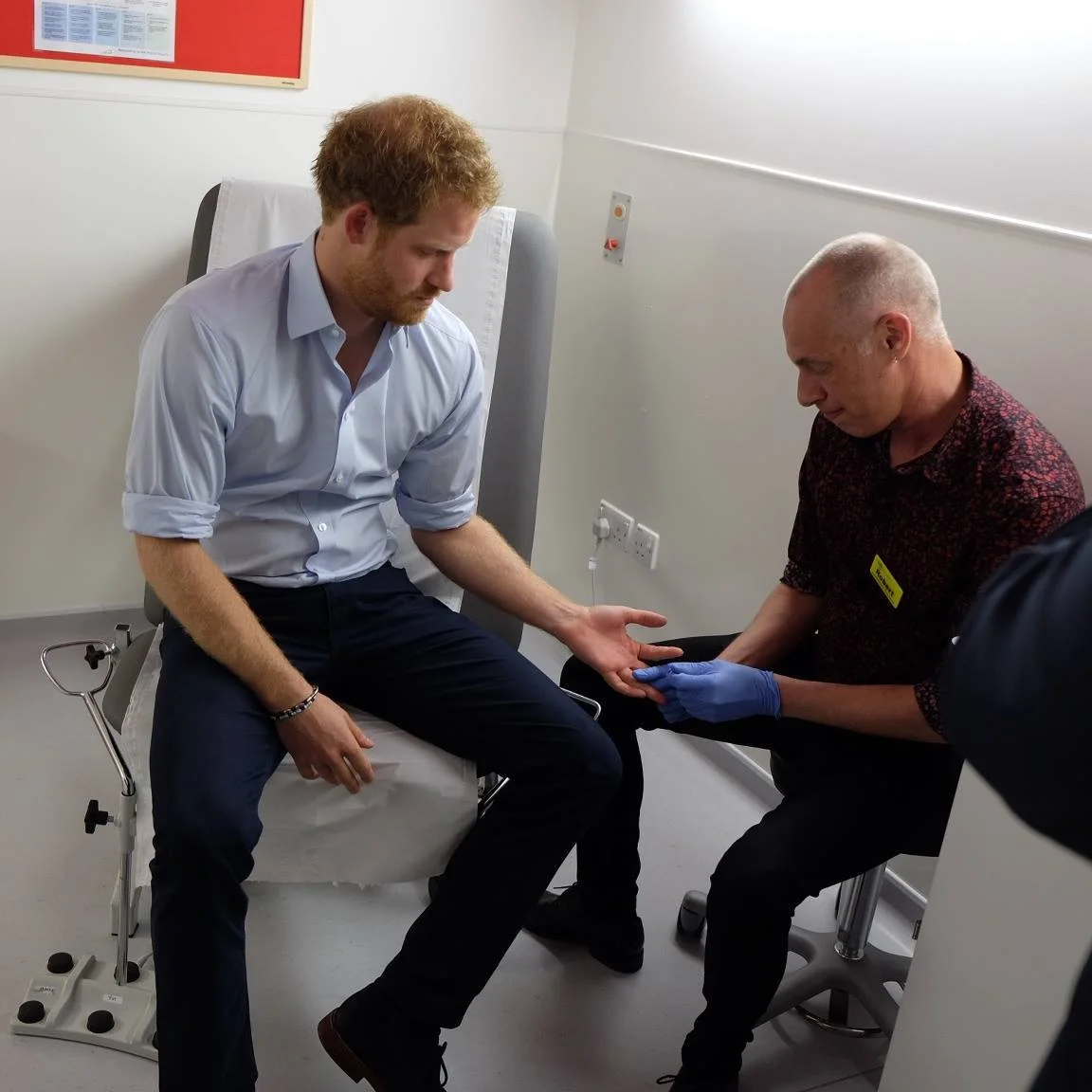
Prince Harry Gets Tested for HIV

Prince Harry Gets Tested for HIV

Prince Harry's recent posting of his HIV test live on Facebook lead to an upsurge of testing in England. 

Let's keep up the momentum here; if we all get tested, we will all know our status.                                                         Call for an appointment today! (603) 448-8887


Read More

The World Could End AIDS if It Tried

NY Times Editorial; June 13, 2016

The world has made so much progress in reducing the spread of AIDS and treating people with H.I.V. that the epidemic has receded from the public spotlight. Yet by any measure the disease remains a major threat — 1.1 million people  from AIDS-related causes, and 2.1 million people were infected with the virus. And while deaths are down over the last five years, the number of new infections has essentially reached a plateau.

The United Nations announced a goal last week of ending the spread of the disease by 2030. That’s a laudable and ambitious goal, reachable only if individual nations vigorously campaign to treat everyone who has the virus and to limit new infections.

The medicines and know-how are there, but in many countries the money and political will are not. Besides shining a spotlight on the disease, it’s crucial that wealthy nations like the United States continue to pony up generously to underwrite what must be a global effort. Donors and low- and middle-income countries need to increase spending to $26 billion a year by 2020, the United Nations says, up from nearly $19.2 billion in 2014.

While still high, deaths attributable to AIDS are down 36 percent from 2010. That is largely because many more people are receiving antiretroviral drugs — 17 million people in 2015, compared with 7.5 million five years earlier. These medicines allow people to live near-normal lives and greatly reduce the risk of transmission to others.

But while some countries like South Africa (once a disaster zone) and Kenya have made tremendous progress in increasing treatment, many people who need the lifesaving therapy do not have access to it. Only 28 percent of those infected in Western and Central Africa were being treated in 2015, according to a recent United Nations report. The numbers were even lower in the Middle East and North Africa (17 percent) and Eastern Europe and Central Asia (21 percent). In some countries, people who test positive are told to come back when they get sick because of budget constraints, says Sharonann Lynch, an H.I.V. policy adviser at Doctors Without Borders. Many never return.

In other places, it can be hard to even reach people who need drugs because of war or the lack of a functional public health system. And many who need help are unwilling to come forward because they fear being ostracized or worse because they are gay, use drugs or are engaged in sex work. Discriminatory laws and attitudes in countries like Nigeria, Russia and Uganda have probably forced tens of thousands of people who need help into hiding.

In some countries, infections have actually increased, which helps explain why progress has plateaued over all. In Eastern Europe and Central Asia, for instance, 190,000 people became infected last year, up from 120,000 in 2010. And while the number of deaths is way down, the number of new infections was flat or down modestly over the same five-year period. This was also true of the United States, where an estimated 44,073 people were diagnosed in 2014, the most recent year for which the Centers for Disease Control and Prevention have published data, down from 44,940 in 2010.

These numbers do not argue for complacency, but instead for more vigorous public health campaigns, increased access to condoms, clean needles for drug users and prescriptions for pre-exposure drugs. There is still no cure for AIDS. But there are many ways to minimize its deadly consequences.


"Out and Safe" at the Main Street Museum

Please join us Tuesday, April 12th @ 6:30 pm for “Out&Safe”, a workshop all about keeping safe in conflicts of all kinds. In this forum centered around presentations by Grace Alden and Hilary Mullins, we will be discussing approaches to deescalation and non-defensive communication, as part of TRANSpossibilities, the Main Street Museum’s ongoing educational, outreach, and advocacy series.

https://www.facebook.com/mainstreetmuseum/photos/gm.189598248086155/977438712345043/?type=3


Syringe Exchange NHPR Interview

HIV/HCV Resource Center Executive Director Laura Byrne, NH Rep. Joe Hannon, Greenland Police Chief Tara Laurent and others discuss Syringe Exchange on NHPR's "The Exchange." 

http://nhpr.org/programs/exchange

March 22,2016                                      9:00am-10:00am